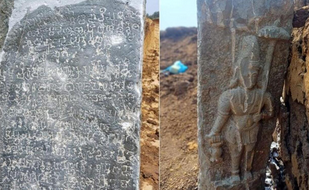
Inscription from Vikramaditya I Era

Recently, archaeological discovery was made at Madapura Lake in Nyamati taluk, Davangere district. An inscription dating back to the 7th century AD was unearthed. This inscription, measuring five feet in length, contains 17 lines in Old Kannada script. It is attributed to the reign of Vikramaditya I of the Badami Chalukya dynasty, who ruled from 654 to 681 AD. The finding adds valuable vital information about the administration and social organisation of that period.

Vikramaditya I

Vikramaditya I was the third son of Pulakesin II. He ascended the throne after a period of instability from 642 to 655 AD. His reign is noted for restoring order and repelling the Pallava invasions. He successfully recaptured Vatapi and established strong governance across his territory.

Significance of the Inscription

The inscription reveals an administrative act by Singhavenna, an officer under Vikramaditya I. It records the waiver of taxes for local villagers, denoting welfare initiatives. Additionally, it notes a land donation of six acres for lake construction, showcasing early landholding patterns and community structures.

Administrative Divisions

The inscription indicates that Ballavi was administrative unit, comprising around 70 villages. This reflects a well-organised local governance system during the 7th century AD. The discovery provides a glimpse into the complexities of administrative divisions and governance in ancient Karnataka.

Cultural Continuity and Later Significance

An intriguing aspect of the inscription is the incomplete relief sculpture from the 17th century AD found on the stone slab. This suggests that the site maintained cultural or religious significance in later centuries. It implies a continuity of traditions and values beyond the initial inscription’s creation.


Viksit Vibrant Villages Program to Take Place From 15th to 30th May 2025; Registrations on MY Bharat Platform Started from 23rd April

500 MY Bharat Youth Volunteers from Across Country to Work Directly with Communities in 100 Selected Villages of Leh-Ladakh, Himachal Pradesh, and Uttarakhand

Program to Empower Youth to Take Lead in Giving New Identity to Border Villages and Transform India’s Frontier Communities

The Viksit Vibrant Villages Program is a joint initiative aimed at revitalizing India’s remote border regions. Spearheaded by the Ministry of Youth Affairs and Sports, in coordination with the Ministry of Home Affairs, the program will be implemented with support from local governance bodies and the Indo-Tibetan Border Police (ITBP). It will focus on Leh-Ladakh, Himachal Pradesh, and Uttarakhand, taking place from 15th to 30th May 2025.

This initiative will empower youth by involving 500 MY Bharat volunteers from across the country, who will work directly with communities in 100 selected villages. These volunteers will drive grassroots engagement and community development through a variety of initiatives, ranging from educational support and infrastructure enhancement to healthcare and cultural preservation. By engaging local residents and leveraging the strength of youth leadership, the program aims to bring long-lasting, positive transformation to these border areas.

Registration for the Viksit Vibrant Villages Program officially commenced on 23rd April 2025 via the MY Bharat Portal. Volunteers from across India are encouraged to apply for this transformative opportunity. 10 MY Bharat volunteers will be selected from the Union Territories and 15 from each participating state. In total, 500 volunteers will be chosen to serve as the backbone of the program, leading and coordinating activities within the villages.

As part of this program, immersive learning journeys, cultural exchange programs, and grassroots development projects are being rolled out, allowing the youth to directly interact with the unique socio-cultural and strategic fabric of India’s border regions.

The program will unfold over 7 days, with each day dedicated to a distinct domain of community development. The activities will include, but are not limited to:

1. Community Engagement

2. Youth Leadership Development

3. Cultural Promotion

4. Healthcare Awareness and Support

5. Skill-building and Education

6. Environment Protection Best Practices

7. Career Counselling Sessions

8. Fitness Activities like Sports, Yoga, Meditation, etc

9. Open Mic, Essay, Fireside Chat, etc on My Dream India

Knowledge Transfer and National Consciousness

Through this program, young citizens will have the opportunity to explore and document the heritage, resilience, and potential of border communities. These experiences, when shared through digital platforms, community discussions, and institutional presentations, will ensure that the voices of India’s frontier residents reach wider national and global audiences.

The initiative encourages youth to not only witness but actively contribute to the development of these areas – be it through innovative projects in education, entrepreneurship, sustainable agriculture, or local governance. This interaction cultivates mutual respect, deeper national unity, and the emergence of border villages as ‘cultural beacons’ rather than isolated outposts.

From Forgotten to Celebrated: Giving Border Villages a New Identity

The program seeks to dismantle the long-held stereotype of border villages being “the last on the map.” Instead, it celebrates them as ‘first villages’ in the journey toward Viksit Bharat  by 2047. Through sustained youth involvement, these villages will be given a platform to showcase their language, art, music, architecture, and stories – redefining their identity from that of a geopolitical buffer to centers of heritage, innovation, and national pride. The Viksit Vibrant Villages program is not just a government effort – it is a generational mission to ensure that development, identity, and dignity ow to every corner of the country, with the youth leading the way.

To kick-start this initiative, the Ministry will conduct an orientation program in Delhi, where all selected volunteers will undergo an intensive briefing and training session. This orientation will ensure that the volunteers are well-prepared to carry out the program’s objectives and equipped with the necessary knowledge to engage with local communities effectively. The orientation program will provide a unique opportunity for the volunteers to develop crucial leadership skills, gain deeper insights into rural community needs, and learn how to coordinate their efforts with the local governance systems.

This structure aims to provide a well-rounded learning experience for volunteers, ensuring that they not only contribute to village transformation but also grow personally and professionally throughout the program. This initiative will serve as a catalyst for positive change in the border regions of India, empowering the youth to become active participants in nation-building. By providing youth with the platform to engage directly with local communities, the program seeks to foster a spirit of National integration, cultural pride, and strategic development.

AIIMS Raipur successfully performs its first Swap Kidney Transplant

It is estimated that Swap Kidney Transplants can increase the number of transplants by up to 15%

AIIMS Raipur has also been first amongst the newer AIIMS to start Deceased Donor Organ Donation and Deceased Donor Kidney Transplantation; it is also the first in the state to start Deceased donor Paediatric Kidney Transplantation

Till date, AIIMS Raipur has performed 54 kidney transplants with a graft survival rate of 95% and patient survival rate of 97%, reflecting its clinical excellence and commitment to high-quality patient care

Under the guidance of the Ministry of Health & Family Welfare, AIIMS Raipur successfully performed its first Swap Kidney Transplant, also known as a Kidney Paired Transplant (KPT). With this achievement, AIIMS Raipur becomes the first among the newer AIIMS institutions and the first government hospital in the state of Chhattisgarh to carry out this complex and life-saving procedure. This significant milestone underscores the institute’s commitment to advancing healthcare and providing innovative treatment solutions for patients suffering from end-stage kidney disease.

It is estimated that Swap Kidney Transplant lead to a 15% increase in the number of transplants. Recognizing its potential, the National Organisation and Tissue Transplant Organisation (NOTTO) has recommended for the implementation of Swap donor transplantation to all the states and Union Territories as this option could increase the number of donors. NOTTO has also decided to have a ‘uniform one nation one swap transplant programme’ to facilitate these transplants more effectively across the country.

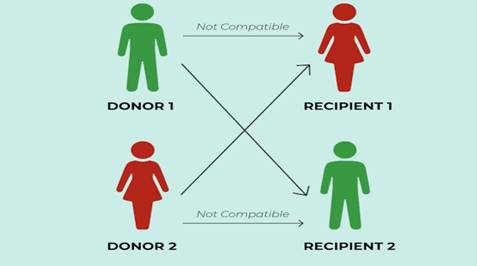
In a Swap Transplant, a patient with renal failure who has a willing living donor—but is unable to receive the kidney due to an incompatible blood group or the presence of HLA antibodies—can still undergo a transplant by exchanging donors with another incompatible pair. Through this arrangement, both recipients receive compatible kidneys, resulting in successful transplants for both pairs.

In the landmark case at AIIMS Raipur, two male ESRD patients, aged 39 and 41 from Bilaspur, had been on dialysis for three years. Both were advised to undergo kidney transplantation. Their respective wives came forward as living donors. However, due to blood group incompatibility – one pair having B+ and O+, and the other O+ and B+ – direct donation was not possible. To overcome this challenge, the transplant team at AIIMS Raipur coordinated a successful swap transplant. Each donor gave her kidney to the other recipient, ensuring blood group compatibility and enabling both patients to receive life-saving organs. The surgery was conducted on 15th March 2025, and all four individuals – both donors and recipients – are currently recovering well under close observation in the Transplant ICU. This milestone reflects AIIMS Raipur’s growing capabilities in advanced medical care and its commitment to providing innovative solutions for patients battling chronic kidney disease.

The Swap Transplant team consisted of Dr Vinay Rathore (Transplant Physician); Dr Amit R Sharma, Dr Deepak Biswal and Dr Satyadeo Sharma (Transplant Surgeons); Dr Subrat Singha, Dr Mayank, Dr Jitendra and Dr Sarita Ramchandani (Anaethesiologists) and other Transplant Co-ordinator team members and OT and Transplant Nursing staff.

AIIMS Raipur has played a pivotal role in the development of Organ Transplant in Chhattisgarh. The institute has successfully developed a renal transplant program, encompassing both living and deceased donor transplants. Six deceased donors have donated their organs in last two years.

AIIMS Raipur has also been first amongst the newer AIIMS to start Deceased Donor Organ Donation and Deceased Donor Kidney Transplantation. It is also the first in the state to start Deceased donor Paediatric Kidney Transplantation. To date, the institute has performed 54 kidney transplants with a graft survival rate of 95% and patient survival rate of 97%, reflecting its clinical excellence and commitment to high-quality patient care.

Software launch of CGHS Digital Health Platform

CGHS to launch modernized Health Management Information System (HMIS) from 28th April 2025; legacy system to be discontinued

All CGHS services, including those at Wellness Centres, to remain closed on 26th April 2025 (Saturday) to facilitate the transition

PAN-based beneficiary identification, real-time tracking, automated payment verification, and fully online application workflows introduced

Legacy websites www.cghs.gov.in and www.cghs.nic.in to become non-functional; new portal launched at www.cghs.mohfw.gov.in

CGHS mobile applications for Android and iOS re-launched with upgraded interface and integrated digital services

Posted On: 23 APR 2025 11:41AM by PIB Delhi

The Central Government Health Scheme (CGHS), a flagship programme under the Ministry of Health and Family Welfare, Government of India, is undergoing a major digital transformation with the launch of the next-generation Health Management Information System (HMIS). Developed by the Centre for Development of Advanced Computing (C-DAC), this comprehensive digital platform is scheduled to go live from 28th April 2025.

The transformation is being implemented in view of the technical obsolescence of the existing CGHS software, which has been in use since 2005 and lacks compatibility with modern IT standards, cyber security frameworks, and user expectations. The revamped HMIS will enable faster, more transparent, and user-friendly access to CGHS services, ensuring improved service delivery and administrative efficiency.

To ensure a seamless rollout, all CGHS services including those at Wellness Centres shall remain closed for one day on 26th April 2025 (Saturday). This temporary suspension is necessary to complete data migration, switch-over activities, and final validation.

Key Reforms and Technological Advancements in the New CGHS HMIS

  1. PAN-Based Unique Identification of Beneficiaries
    • Every beneficiary will now be mapped to a unique PAN-based identifier. This will eliminate duplication of records and help in streamlining the validation process for entitlements.
  2. Integrated Digital Verification & Contribution Tracking
    • Contribution payments will now be auto-verified through direct integration (Line of Business Application Integration) with Bharat Kosh. There will be no manual choosing of options, entry of details on Bharat Kosh portal which shall eliminate errors and refund issues.
  3. Pre-payment Scrutiny of Applications
    • New system enables scrutiny and approval of card applications before the payment stage. This ensures that applicants are guided regarding eligibility and contribution amount before making a payment.
  4. Online Card Modification Services
    • Services like card transfers, change in dependent status, and category change (Serving to Pensioner, etc.) can now be initiated and completed entirely online.
  5. Real-Time Application Tracking and Alerts
    • The system will generate SMS and email alerts at each stage of application processing. This increases transparency and reduces in-person follow-ups.
  6. Mandatory Password Reset and Secure Access
    • All existing users will be prompted to reset their passwords on first login. This is being enforced as a cyber hygiene measure in accordance with MeitY security advisories.
  7. DDO/PAO-Based Department Identification
    • Department identity will be verified using Pay and Accounts Office (PAO) and Drawing and Disbursing Officer (DDO) codes, as indicated in employee salary slips. This ensures backend mapping of sponsoring authorities.
  8. Mobile Application Relaunch (Android & iOS)
    • The official CGHS mobile apps have been re-developed and now offer an enhanced beneficiary experience with:
    • Access to Digital CGHS Card
    • Real-time status tracking
    • E-referrals and appointment scheduling (where applicable)
    • Integrated contact with Helpdesk and AD Offices

Legacy System Deactivation and Website Migration

From 28th April 2025, the old CGHS websites www.cghs.gov.in and www.cghs.nic.in will be deactivated. All services and information will henceforth be hosted on the new unified CGHS Digital Platform at www.cghs.mohfw.gov.in.

Beneficiaries are advised to access all online services, including registration, application, grievance redressal, and information retrieval, through this new portal only.

All legacy beneficiary data, including medical history and pharmacy transactions, are being securely migrated, ensuring no loss of records. The transition complies fully with government data privacy and protection standards.

Additionally, the department shall be onboarded on the new CGHS Platform for a paperless approval process. In the interim, departments may continue to submit applications physically at the respective CGHS Card Sections.

Advisory for Beneficiaries and Departments

  • 28th April onwards, CGHS Contribution shall be only through CGHS Website i.e. www.cghs.mohfw.gov.in. The existing manual process of payment available on www.bharatkosh.gov.in shall discontinue from 28th April 2025.
  • Applications for CGHS services in progress but not paid for by 27th April 2025 will lapse. A fresh application will be required through the new portal.
  • All Beneficiaries aged above 18 years are advised to link their PAN Card with their CGHS Beneficiary ID and apply for corrections in case of any errors through the beneficiary login on CGHS website www.cghs.mohfw.gov.in.
  • Instructions shall be issued for the Departments regarding onboarding on the new platform.
  • The existing issued cards shall continue to function normally.

Support initiatives include:

  • CGHS Helpdesk and User Manuals are available on the CGHS website www.cghs.mohfw.gov.in and mobile app for use by Departments and Beneficiaries.
  • Continuous support through the CGHS Card Sections and respective Additional Director (AD) Offices.

Yuva Shakti with the Power of Knowledge key to Viksit Bharat”: Sarbananda Sonowal

“Knowledge is power, and students must acquire it”: Sarbananda Sonowal

“New ideas and innovative thinking of Students must be harnessed”: Sarbananda Sonowal

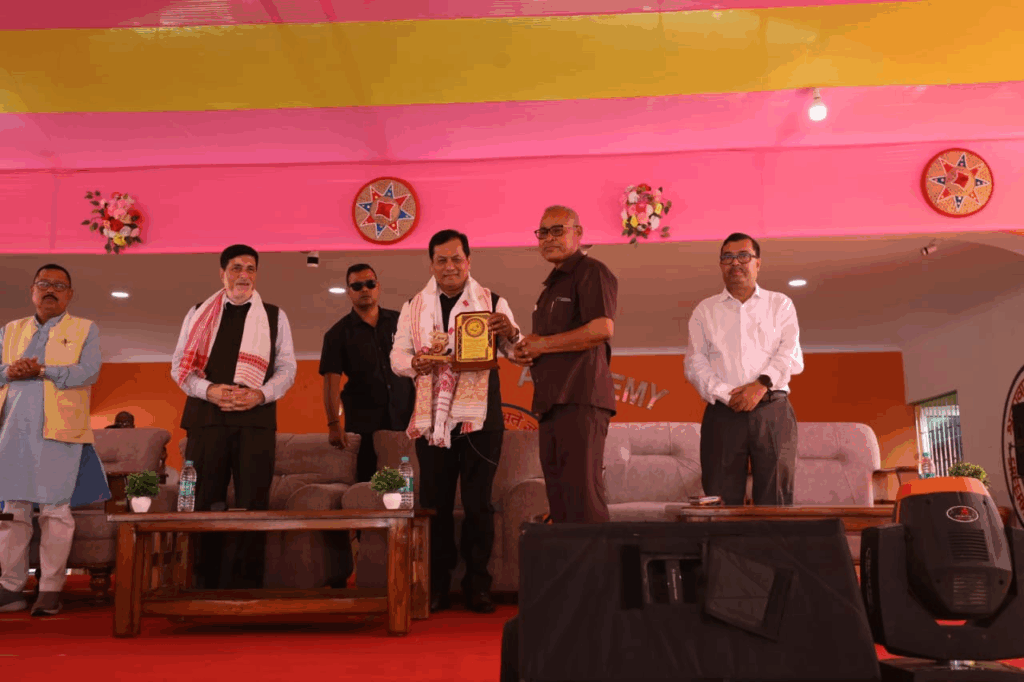
The Union Minister of Ports, Shipping & Waterways, Shri Sarbananda Sonowal called on harnessing new Ideas and innovative thinking of students. Sonowal identified how Yuva Shakti with the Power of Knowledge are key to realising the vision of Viksit Bharat. Shri Sonowal was addressing and interacting the students of Sreeram Academy Pathsala today on the occasion of its 20th Foundation Day celebration. 

Shri Sarbananda Sonowal, graced the occasion as the Chief Guest. The vibrant gathering included students, teachers, parents, alumni, and distinguished local dignitaries, making the occasion a memorable milestone in the institution’s illustrious journey.

On the occasion, Union Minister Shri Sarbananda Sonowal said, “Students must not confine themselves to textbooks alone; they should strive to introduce new ideas and innovative thinking.” He highlighted the transformative initiatives of the Government of India, noting, “Programmes like Digital India, Make in India, and Skill India have been launched to empower the new generation, equipping them with the tools to lead and innovate.” 

“Knowledge is power, and students must acquire it and apply it effectively for the greater good.” Shri Sonowal also underscored the significance of value-based education, stating, “Education rooted in moral values must be prioritised. I urge parents to raise their children as responsible citizens and also to emphasised the importance of integrating Yoga and holistic health practices into daily life. “Yoga is not just physical exercise; it is a way of life that brings mental clarity and physical strength. It helps one stay focused, balanced, and healthy,” added Shri Sarbananda Sonowal.

The celebration featured captivating cultural performances by students, including dance, music, and drama, which showcased their talents and enthralled the audience.

The event was also attended by Phanidhar Talukdar, MLA of Bhawanipur Constituency, Shri Dhanpati Deka, Honorable Vice-Chancellor of Bhattadev University, Dr. Kakali Das, Principal Shree Ram Academy along with other notable dignitaries. 

Union MoS for Health and Family Welfare, Smt. Anupriya Patel delivers keynote address at 15th International Meeting of World Pharmacopoeias in New Delhi today


Reaffirms India’s commitment to global pharmaceutical standardization and regulatory convergence

“IMWP serves as a vital platform to foster international collaboration in pharmacopoeial science and regulatory harmonization”

Releases IPC Newsletter 2024 and a special IPC video film which showcase India’s advancements in pharmacopoeial science

Union Minister of State for Health and Family Welfare, Smt. Anupriya Patel delivered the keynote address at the 15th International Meeting of World Pharmacopoeias (IMWP), hosted by the Indian Pharmacopoeia Commission (IPC) under the aegis of the Ministry of Health and Family Welfare, Government of India, in collaboration with the World Health Organization (WHO), here today. The meeting brought together global pharmacopoeial leaders, regulatory authorities, and industry stakeholders to deliberate on key issues related to pharmaceutical standards and harmonization.

Addressing the gathering, Smt. Patel reaffirmed India’s commitment to global pharmaceutical standardization and regulatory convergence. She highlighted India’s role as the “Pharmacy of the World” and emphasized the importance of ensuring access to high-quality medicines globally. She stated that the IMWP serves as a vital platform to foster international collaboration in pharmacopoeial science and regulatory harmonization.

On this occasion, the Union Minister also released the IPC Newsletter 2024 and a special IPC video film, which showcase India’s advancements in pharmacopoeial science and the Commission’s efforts in ensuring high-quality pharmaceutical standards. The video film can be accessed at the following link: https://www.youtube.com/watch?v=MCdAZodvOSM.

Smt. Punya Salila Srivastava, Secretary, Ministry of Health and Family Welfare, underscored the significance of global partnerships in strengthening pharmaceutical quality standards. She reiterated India’s efforts in aligning regulatory frameworks with international best practices and ensuring the availability of safe and effective medicines worldwide.

Dr. Rajeev Singh Raghuvanshi, Secretary-cum-Scientific Director, IPC, and Drugs Controller General (India), highlighted IPC’s contributions in setting global benchmarks in pharmacopoeial science. He elaborated on IPC’s initiatives, including the IP Online platform, which enhances accessibility and usability of Indian Pharmacopoeia standards. He emphasized the role of scientific advancements and regulatory cooperation in shaping global pharmaceutical standards.

Dr. Roderico H. Ofrin, WHO Representative to India, commended India’s leadership in pharmacopoeial standard-setting and emphasized the importance of regulatory harmonization in ensuring patient safety and public health.

The 15th IMWP is set to facilitate discussions on key focus areas, including:

  • Updates on recommendations from the 14th IMWP and review of progress on harmonization initiatives.
  • Emerging issues in impurity assessment (Q3) and the implications of ICH Q6 guidelines on pharmacopoeial monograph specifications.
  • Defining the IMWP Charter to establish a long-term governance structure for the forum.
  • Enhancing collaboration among global pharmacopoeias and regulatory bodies, with updates from the Pharmacopoeial Discussion Group (PDG).
  • Promotion of environmental sustainability in pharmacopoeial practices and pharmaceutical manufacturing standards.
  • Finalization of reports for the 15th IMWP and preparatory discussions for the 16th IMWP.

The deliberations during the IMWP will reinforce the role of pharmacopoeias in ensuring the quality, safety, and efficacy of medicines. The outcomes of the meeting will guide future collaborations in standard-setting and regulatory harmonization.

The 15th IMWP, which commenced today, will conclude on 7th February 2025. The discussions held over these three days will set the stage for further strengthening global pharmacopoeial cooperation and enhancing pharmaceutical quality assurance.

Evolve into strategic advisors, ethical guardians & innovators to stay relevant in this technology-driven environment: Raksha Mantri to CAs at  World Forum of Accountants

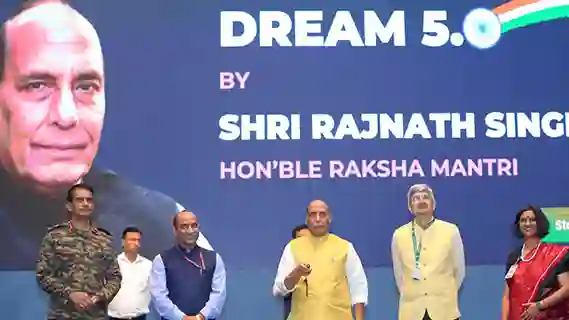
Raksha Mantri Shri Rajnath Singh has called upon the Chartered Accountants (CAs) to evolve into strategic advisors, ethical guardians and innovators in order to stay relevant in the present dynamic & technology-driven environment. Addressing the inaugural session of the World Forum of Accountants organised by the Institute of Chartered Accountants of India (ICAI) in New Delhi on January 31, 2025, Shri Rajnath Singh termed ‘new set of skills, including critical thinking, emotional intelligence & adaptability’ as an essential requirement in today’s times.

Underscoring the extraordinary pace of technological advancements, Raksha Mantri stated that the corporate landscape was once dominated by large, centralised organisations, and this status quo has been challenged by the active surge in the number of start-ups. He pointed out that transnational trade is now a reality, with organisations growing larger and more intricate, resulting in information explosion.

“This dynamic environment demands constant innovation. The traditional ways of processing and analysing information are being challenged by new innovations whose value is still not clear. These realities mean that as accountants, you must not only learn continuously but also innovate and adapt to stay ahead of the curve. You are the guardians of trust, the gatekeepers of accountability, and ultimately, the custodians of prosperity in this ever-evolving world. The future not only demands expertise, but also courage & creativity to innovate and uphold the highest standards of your profession,” Shri Rajnath Singh told the CAs present on the occasion.

Asserting that India is a resurgent power on the global stage and the businesses & reputation of Indian professionals are thriving internationally, Raksha Mantri acknowledged the recognition earned by the CAs for their trustworthiness and expertise. “For CAs, signature is not just a symbol, but also a representation of trust, integrity and professionalism. It has the ability to influence financial decisions, shape businesses and impact lives of one & all,” he added.

Shri Rajnath Singh phrased ‘accountants’ as the sentinels of organisational transparency, tasked with disseminating crucial information about profits, losses, cash flows, balance sheets, assets and liabilities. He stated that being trustworthy, truthful, and maintaining integrity are fundamental individual values for any accountant, terming them as the cornerstone of the collective ethos that upholds the credibility of the entire financial ecosystem.

Raksha Mantri lauded the dedication and commitment of CAs who, he said, have been instrumental in the growth of the country. To the accountants of friendly countries present on the occasion, he stated that India is open to business, and it means business. “We are willing to learn, adapt and share our expertise. We are ready to invest in our shared planetary future,” he said.

The theme of the three-day event is ‘Accountability Meets Innovation (AI): For a Sustainable Planet’. It aims to deliberate on a number of themes, including the Future of Finance and Accounting, Accountancy as a Catalyst for Sustainable Development, Accountants as Business Advisors, Building Trust and Public Confidence, Accountants as climate change leaders, AI in Sustainability Reporting, Ethical AI in Accounting, AI-Driven Risk Management for Sustainability.

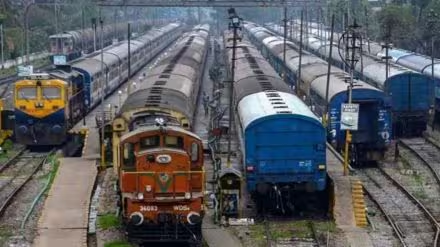
364 trains operated from Prayagraj on Mauni Amavasya by Railways: Shri Ashwani Vaishnaw

Follow the instructions of the administration for safe and smooth travel:Shri Vaishnaw

Indian Railway operated 364 outward trains from various stations of Prayagraj for the convenience of the devotees returning home after taking holy dip in Sangam on the day of Mauni Amavasya, this is a new record of trains run in a single day during Prayagraj Mahakumbh. Along with this, 77 inward trains were also operated by the Railways during this period. Outward trains included 142 regular and 222 Mahakumbh Mela special trains.

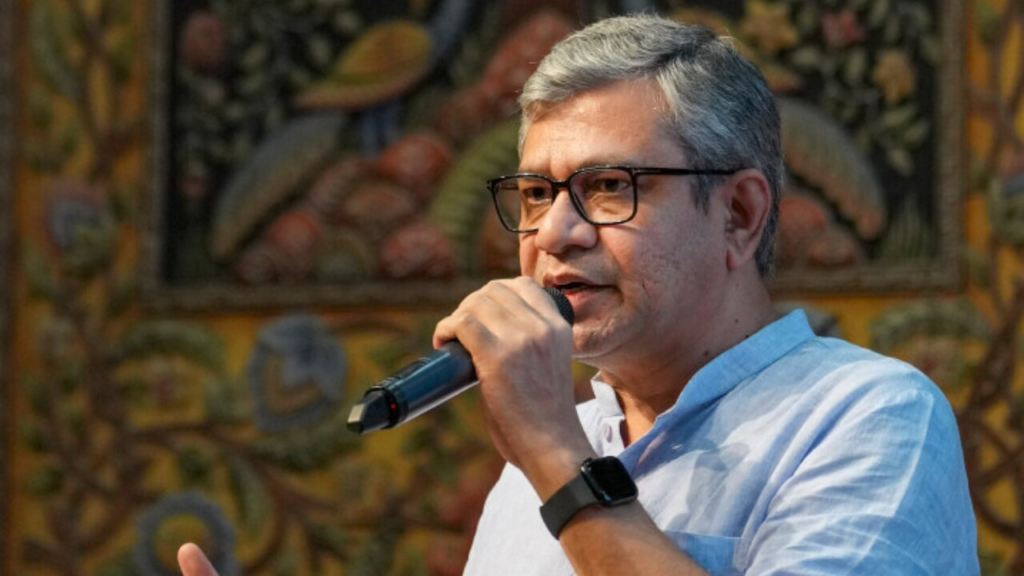
While addressing the media in New Delhi, Union Railway Minister Shri Ashwini Vaishnav today said that 364 trains were operated from Prayagraj on the day of Mauni Amavasya. The team of all the senior officials of the Railways is monitoring the entire situation in real time from the war room located in Rail Bhavan, trains are being operated in constant coordination with the state government. Chairman & CEO,Railway Board and the GMs of all the three Railway Zones are in touch with the Mela administration and the State government to ensure smooth travel of the devotees to their homes. He has requested all the devotees who have come for Sangam Snan (Bath) to follow the instructions given by the administration. The Railways has created large holding areas for the passengers where they can sit and wait for the train in their area. After that, leave for the railway station to board the train as per the instructions given by the administration.

On Mauni amavasya, 280 trains were operated by North Central Railway, including inward and outward, while North Eastern Railway operated 73 trains and Northern Railway operated 88 trains. North Central Railway operated the highest number of 157 Maha Kumbh Mela special trains. Northern Railway operated 28 and Northeast Railway operated 37 trains. Indian Railways is operating 360 special trains today to ensure the safe and comfortable return of devotees to their homes.

During the entire period of the Mela, the Railways has planned to operate about 13,450 trains, which includes 10,028 regular trains and more than 3400 special trains. So far, more than 1900 special trains have been operated. Railways has clarified that all trains are being operated as per plan. In the light of the information given earlier, some trains are being run by changing the route while the terminal station of some trains has been changed to Subedarganj instead of Prayagraj.